
F31

Excel-based real estate model


We believe Excel is the best solution to meet the financial modeling needs of real estate professionals.

Here are the advantages of an Excel-based real estate model:

  • This technology is well known and widely used in the professional world, requiring no specific onboarding. The training time for future users is reduced: if the model is built following financial modeling best practices, navigating such a model is simple and intuitive.
  • A real estate model developed in Excel benefits from extraordinary flexibility: it’s possible to design a tailor-made model by adapting the assumptions and calculation methods to the specific practices of the valuation expert or asset manager.
  • An Excel model is scalable: it’s very easy to add a feature that wasn’t initially planned. For example, as they use a model over time, our clients often add an automatic rent roll import feature or an acquisition financing module.

Our real estate models often share a similar structure:

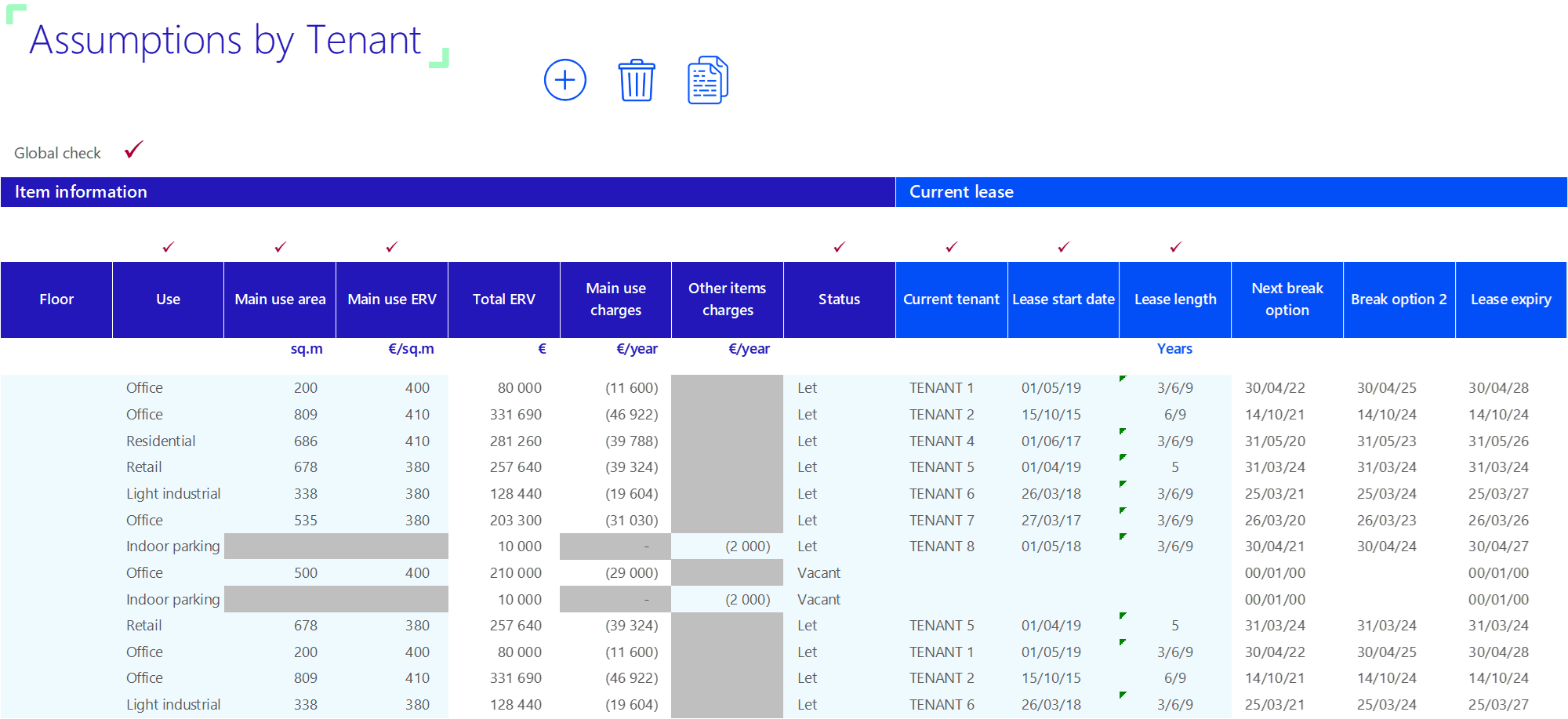
  • Assumptions tabs: global assumptions at the asset level, as well as a rent roll tab for entering parameters at the lease or unit level.
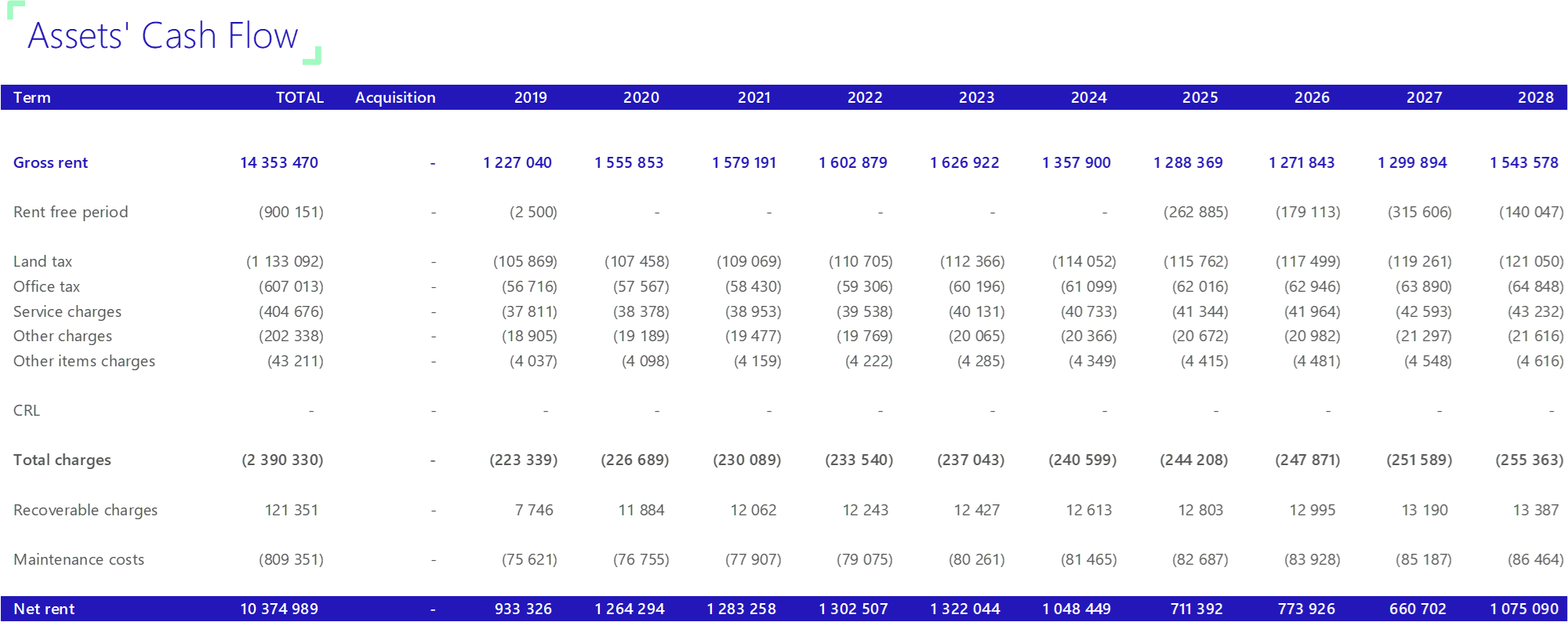
  • Modeling tabs: a cash flow per lease, as well as a consolidated cash flow.
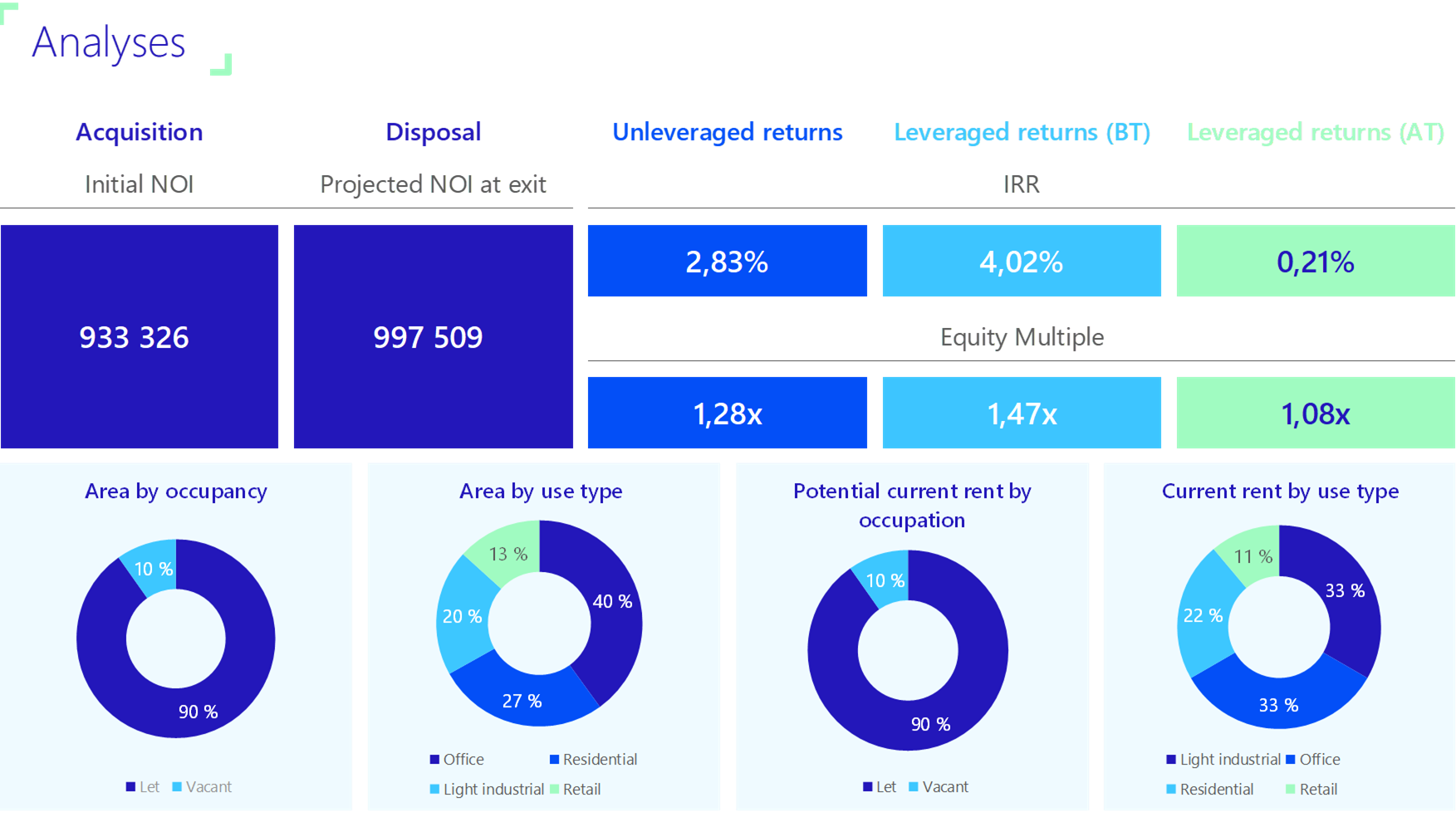
  • Reporting tabs: visual analyses offering an overall view of the asset by use, surface type, or occupancy.

Excel-based acquisition model

The Excel-based real estate model used during the acquisition phase allows real estate investment analysts to calculate an asset’s potential return or assess its target price.

Generally, an acquisition model makes it possible to simulate the cost of debt and the equity contribution required to finance a real estate project.

Excel-based real estate management model

The real estate management model (or asset management model) is essential for the operational phase of a property.

It allows asset managers to model different lease management strategies for an asset: renewing or re-letting a lease, or reselling the building as a whole or unit by unit.

This type of real estate model can also offer the option of restructuring the managed property: for example, it can account for a change in surface area or use, as well as model the impact of such an operation on returns.

Excel-based valuation model

The valuation model (or real estate appraisal model) allows experts to determine a property’s market value. Generally, three main methods are integrated into this type of Excel-based real estate model:

Additional modules can be developed to enhance the model:

  • Automatic generation of an appraisal certificate
  • Addition of a specific valuation tab for shopping centers or building leases
  • Creation of a Gantt-style leasing calendar for a more visual occupancy overview

Our references in real estate models

We have been working with the F31 team for many years, and they have developed and continuously enhanced our real estate valuation model.
Beyond the quality of their attentiveness and responsiveness, we value their strong understanding of our specific challenges (commercial lease modeling, real estate DCF, etc.)

Nicolas BrosseaudPartnerCatella Valuation

We are extremely satisfied with the way the engagement was carried out and with the deliverables provided by F31. They demonstrated a highly professional attitude, a very rigorous methodology, and valuable agility in meeting our complex request for integrated modeling covering our acquisition, asset management, and fund management activities.

Elise ErbsDirector of OperationsWeinberg Capital Partners


This website uses cookies to ensure you get the best experience on our website. Learn more.

Got it!